

ICBA celebrates 50 years of serving open shop construction this year, and we are looking back every week at some of the significant moments, milestones, and people who helped ICBA become Canada’s largest construction association.
Today, we wind the clock back to the mid 1980s and the hiring of the face of ICBA for three decades – Philip Hochstein.
The interviews and other original research on which the ICBA50 series is based were conducted by writer Kevin Hanson. We appreciate Kevin’s work capturing the people, events, and milestones that shaped ICBA’s first half-century.
In 1985, Ralph Purdy stepped down after nearly a decade at the helm of ICBA and the open shop movement in B.C. He was in his late 70s and in declining health.
“It has been a tough, uphill battle,” Purdy told the Vancouver Sun in 1984, of his quest to advance the open shop sector. Purdy was, however, able to cite considerable achievements in his final convention report to members that October. Perhaps the most fundamental of which – harkening back to ICBA’s foundation – was the provincial government’s recognition “that non-union employers and their employees are no longer to be treated as second class citizens, and deserve the right to earn a living.”
But proud though Purdy’s record of achievement was, ICBA had yet to find a firm financial footing, and its future was very much in question. It was housed at this point rent-free within the offices of Martina Enterprises in Surrey, and Christina Koechl was especially active in sustaining its activities during an interim period when it had no employees. In the fall of 1985, there was a meeting of past presidents to decide on a path forward. Three options were on the table: fold it, merge it with another association, or make one last attempt at making it work. They chose the third option, and pinned considerable hope on an upcoming Labour Code seminar, which Philip Hochstein was contracted to help organize.
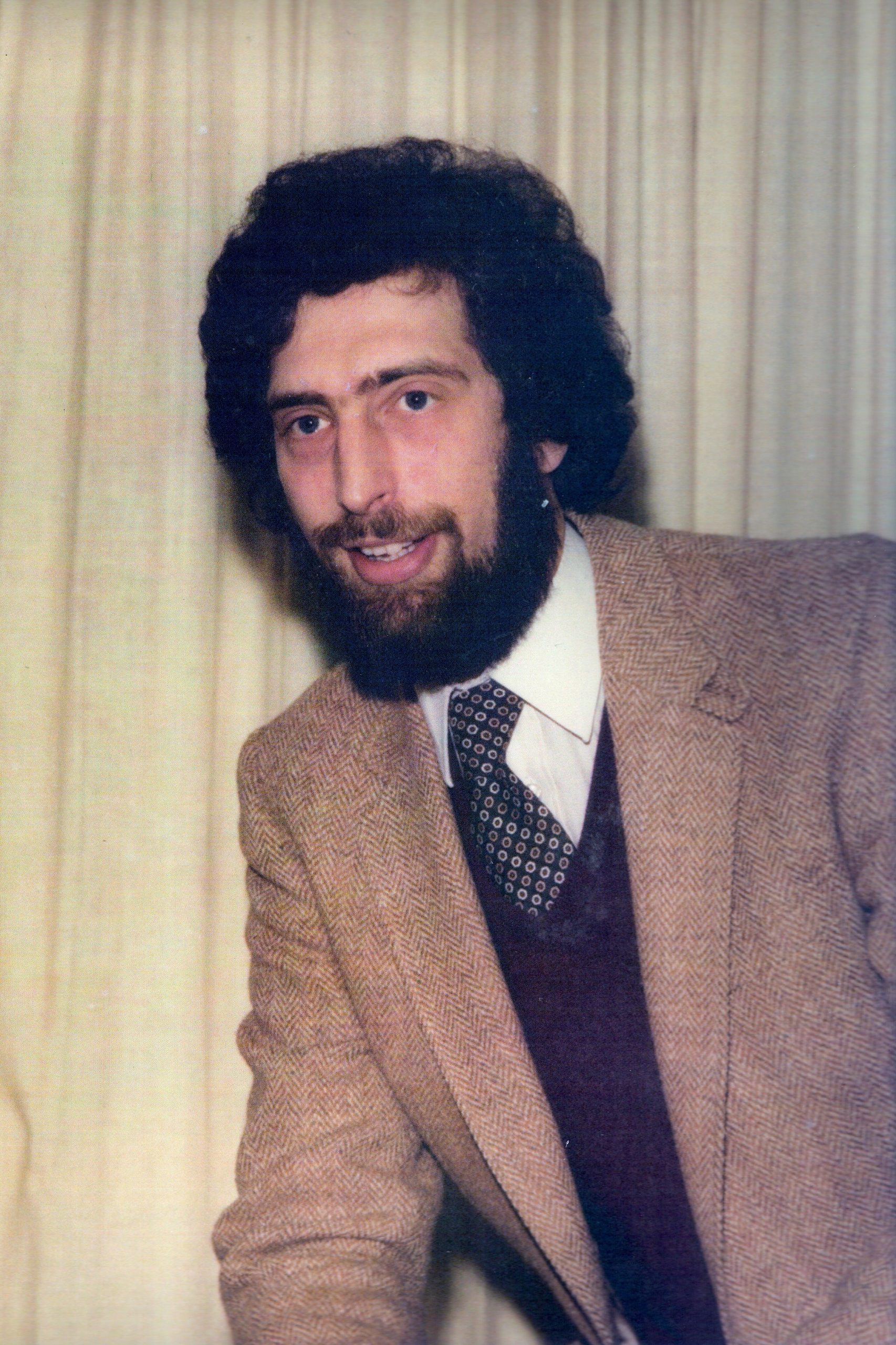
Philip Hochstein, when he joined ICBA
At first glance, Hochstein wasn’t an obvious candidate to join ICBA. A history grad originally from Montreal, he came to B.C. in the late 1970s to pursue graduate studies in public administration at the University of Victoria. Consistent with a taste for underdog causes, he’d been a campaign worker on NDP campaigns in his home province, at a time when it was a near-complete wasteland for the party. And although his views had since shifted towards the free enterprise side of the ideological spectrum, he still had a distinctly hippy-like appearance. He had worked within government, and briefly for the Mechanical Contractors Association, where Hermann Koechl had become acquainted with him.
The seminar in North Vancouver – titled “Working and Prospering Under B.C. Labour Laws – became a make-or-break proposition for ICBA, and it proved to be a remarkable success. Christina Koechl had to re-book larger rooms three times. Participants got valuable information at a time when labour legislation was in flux, and when unionized contractors were increasingly seeking a way out.
Lawyer Peter Gall was a featured speaker, and suggested construction unions still had the potential to grow and prosper if they adopted sufficient flexibility. Union leaders were among the participants, although the event was protested and the Building Trades Council calling it “nothing short of industrial warmongering.” With this initiative, Hochstein began to prove his worth to the organization and he was hired as Ralph Purdy’s replacement. In retrospect, he says, he should have asked to look at the financial statements before accepting the job – which would have revealed an organization with barely enough cash on hand to cover his paycheque. But he took on the challenge, becoming the ICBA’s senior executive and sole staff person.
“They were very principled, that’s the thing that struck me,” says Hochstein of the ICBA members. “They believed in this stuff and they believed it, not because it was an economic advantage or something in it for them, they just thought ‘look this is wrong, my employees want nothing to do with that union, and I don’t really want anything to do with the union, and yet for some reason that worked against me.’”
Hochstein delivered his first address to the membership as executive vice president (his title later changed to president) at a February 1986 convention in North Vancouver. Open shop contractors, he said, “are going to have to be smarter, work harder and run faster than the unions and their union competitors if the recent gains in open shop fortunes and the positive public attitude towards non-union business are to be maintained.” He then outlined an ambitious program of association activities through which he envisioned ICBA assisting its members to do just that.
Hochstein delivered on the promise of stabilizing and professionalizing the association, of enhancing its value proposition for members, and of further increasing its profile and prominence. “After that the world changes and we never looked back,” is how Axel Gringmuth described the impact of Hochstein’s hiring. “He was an incredibly good organizer, and he also had the religion – he saw the injustices and he kept us going.”
Over the first year or so of Hochstein’s leadership, ICBA adopted its current name and shifted its focus more explicitly towards representation of the construction industry. He launched ICBA’s apprenticeship indenturing program in 1986. Recognizing how dramatic the change within the industry had been in recent years, he began to formally market the open shop sector to prospective clients, through such tactics as marketing materials and annual architects’ dinners. He also grew the membership and successfully fostered strong rosters of directors each year, who in turn made instrumental strategic contributions to the association’s ongoing growth and development. In short, he helped ICBA transition from loose knit movement to a professional association.
