

ICBA celebrates 50 years of serving open shop construction this year, and we are looking back every week at some of the significant moments, milestones, and people who helped ICBA become Canada’s largest construction association.
Today, we wind the clock back and look at one of the key founders of ICBA: Elmer Verigin.
The interviews and other original research on which the ICBA50 series is based were conducted by writer Kevin Hanson. We appreciate Kevin’s work capturing the people, events, and milestones that shaped ICBA’s first half-century.
Very few individuals had as big an impact on ICBA as our second president, Elmer Verigin. He is the ultimate ICBA booster, someone who did the hard work in the early years to build our association.
Many ICBA founders started in the business with a different company, usually union. They worked for someone else, were good on the tools, and eventually decided to go out and try their hand at running their own business. As longtime ICBA supporter Don Weitzel explains: “They would start building a couple of spec homes or a gas station or whatever, a small contract. And then would find themselves stifled because they couldn’t bid for anything bigger.”
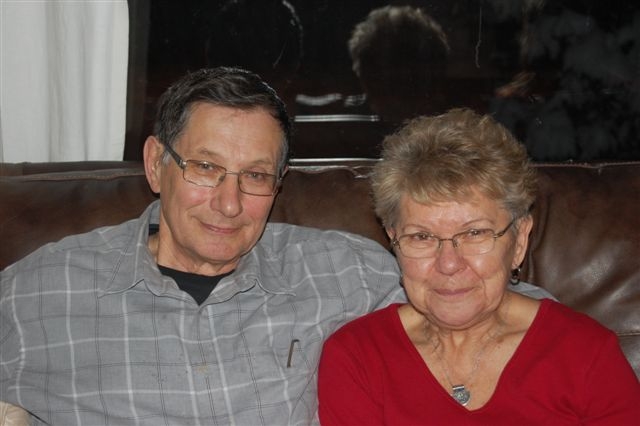
Elmer and Marilyn Verigin
Elmer Verigin – who played a key role in organizing ICBA’s founding convention and went on to serve as its second president – was one of those risktakers. Trained as an engineer, he turned down advancement opportunities in the pulp industry to join his brothers in a house-framing business in the Kootenays, which slowly but surely moved into larger projects. At the time the NDP’s Public Works Fair Employment Act became law, the business had begun doing some public work. “It wasn’t of any consequence, but the fact that we couldn’t bid on it [anymore] was a big thing,” he says. “It was our future, because even though we’re a small contractor, we aspire to be a big contractor someday.”
As Verigin and other open shop contractors pursued their aspirations, they found construction clients who were eager for better value than unionized contractors could provide. Open shop contractors had more competitive labour costs and – at least as importantly – more efficient and productive work practices. Much of that advantage resulted from being able to deploy people without the constraint of “jurisdictional rules” that prescribe which union’s members can do what. As former ICBA President Philip Hochstein puts it: “The sector used skilled people and compensated them competitively, it just didn’t have all the union bullshit that came along with a collective agreement.”
As ICBA’s second president, Verigin travelled the province to recruit new members. One memorable trip had him on a small plane, flying from the Kootenays to Vancouver when snow forced a detour near Merritt. Verigin and ICBA executive member Karl Monk were headed to an association meeting. When the pilot asked for help sighting a railroad track to orient himself, Verigin realized the group was “in a little bit of trouble.” They managed to find their way to the Fraser Valley but the pilot then realized gas was running low.

Elmer Verigin
“I’d been calm, cool and collected,” Verigin says. “Unions couldn’t scare me, but being up here in this god-damn air was just something I couldn’t control.” He was pressed into navigator service to find a landing strip, and after a careening touchdown at Boston Bar they were re-fueled and airborne again. There was some further anxiety when the pilot’s runway approach required urgent intervention by Vancouver air traffic control.
Once on the ground, Verigin recalls saying to Monk: “My mother taught me six psalms, you know in Russian, and I never learned them. I never learned. But I recited them twice today, all six of them.” That particular pilot was a stand-in for Verigin’s fellow ICBA executive member Fin Levick, and he wasn’t asked to help with transport to ICBA meetings again. But despite the drama of the flight, it was just another day in the long, hard process of building ICBA into a cohesive and viable business association.
In the coming weeks of our ICBA50 for 50 series, Elmer’s name will surface again and again as a key ICBA builder.
But in 2021, more than 45 years after founding the association, Elmer sent us this story – reminding us how ICBA’s values and opportunity help everyday people:
Today, I had a special moment.
This flashy pickup truck stopped and hailed me on my morning walk. Being hearing challenged, I had to walk over to understand what he was saying.
“My name is Jason and I was part of the first Carpentry Apprenticeship class (15 total) that were afforded the opportunity to take Carpentry Apprenticeship as a grade 12 class at J. Lloyd Crowe High School in 2003,” he explained.
This class worked with ICBA and then were hired to build 5 cabins and a Camp Services Building at Whatshan. The Whatshan Lake Retreat was then privileged to offer 2 Journeyman Carpenters and retired Superintendents to provide on site supervision and instruction.
“So did you achieve your Red Seal Journeyman status?” I was excited in my question to Jason.
“Yes, and as you see I am now have my own Building Contractor business out of Montrose,” he was proud to explain.
He carried on with, “I was driving by and recognized you. I just wanted to provide you with my gratitude in offering such an opportunity to students like myself and now we have a career.”
I was overwhelmed with emotion. It is not often that one gets an opportunity to meet people this way.
“Are you busy?” I finally was able to speak.
“Yes, very busy!” he responded.
Just another day in my life — or was it?
Elmer is a life member of ICBA, and has visited us several times throughout the years – he is a legend of free enterprise.
